Outdoor Christmas light ideas for Northwest houses, with the lines and feet of each
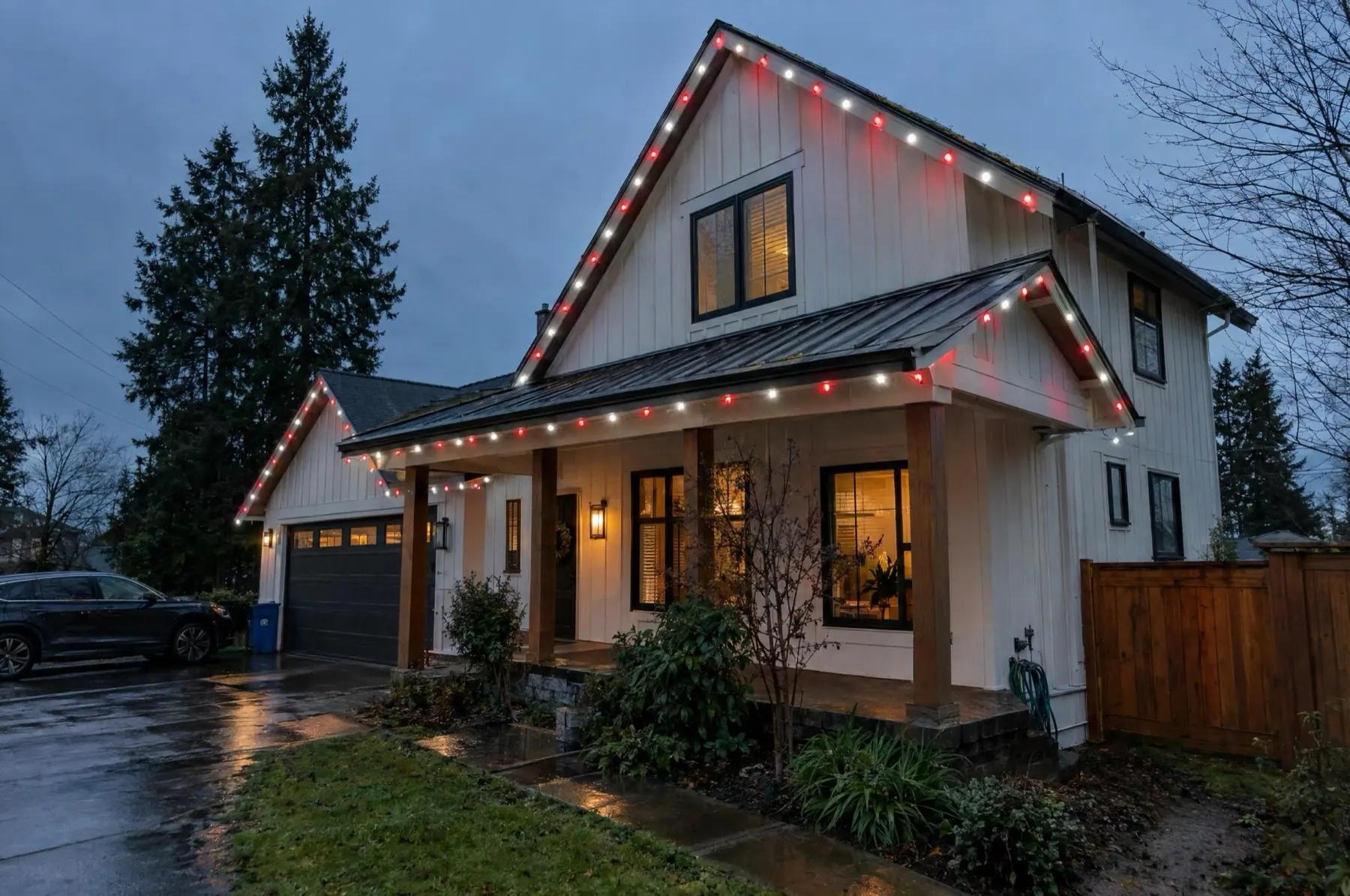
The best outdoor Christmas light idea for most houses is the simplest: warm-white C9 bulbs along the eaves and gables, so the shape of the house glows. Then add what your street sees most: the garage, the porch, a color pattern or the tree out front.
Below are eight ideas for Christmas lights outside your house: the lines each one lights and the usual feet. Year one includes the January takedown and storage. On average, Christmas lights run about $600; smaller homes often cost less, and the free measure gives your exact written quote. We charge by the foot: simple, honest, no hidden fees. Your written quote spells out everything before any work starts.
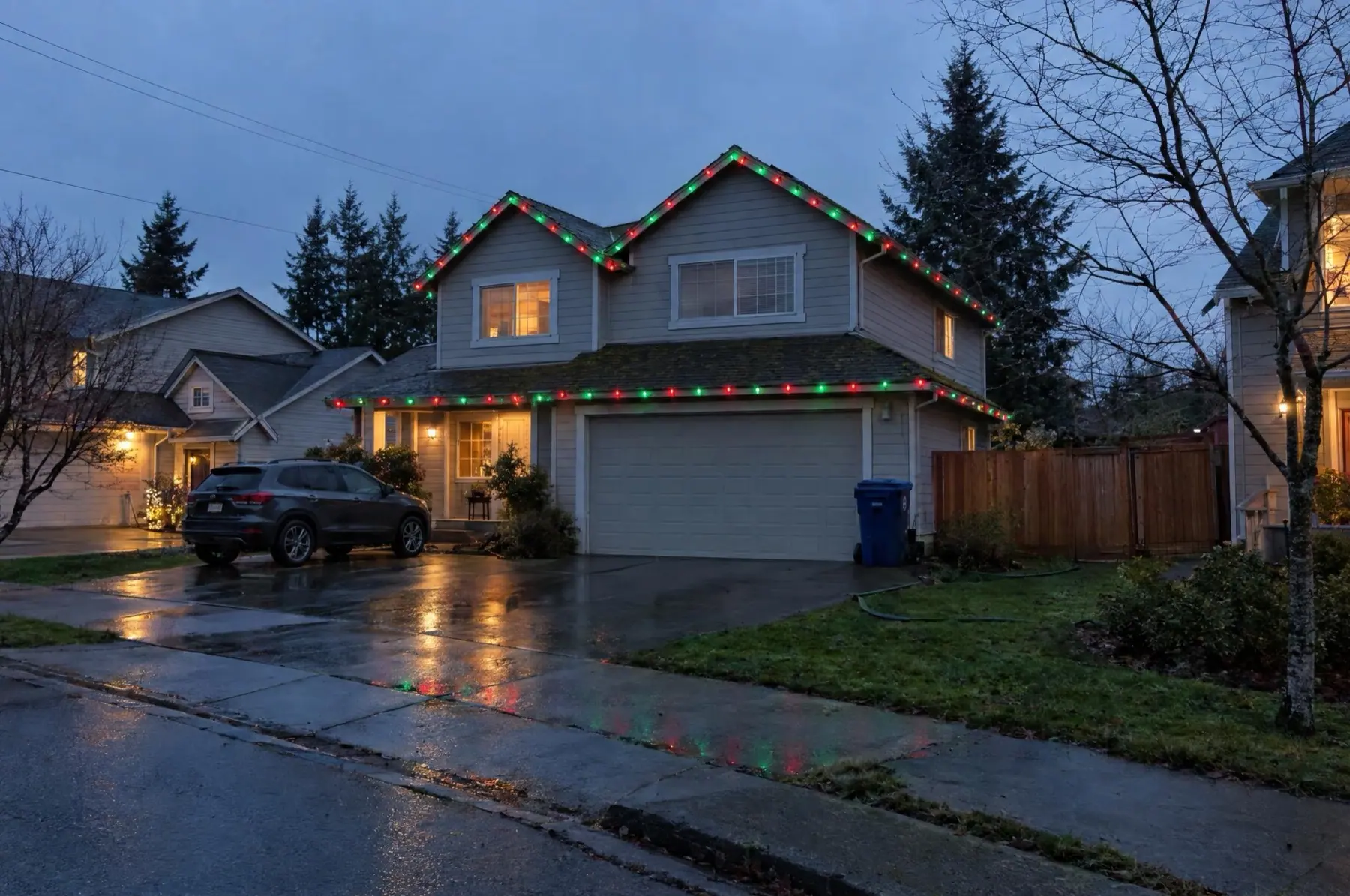
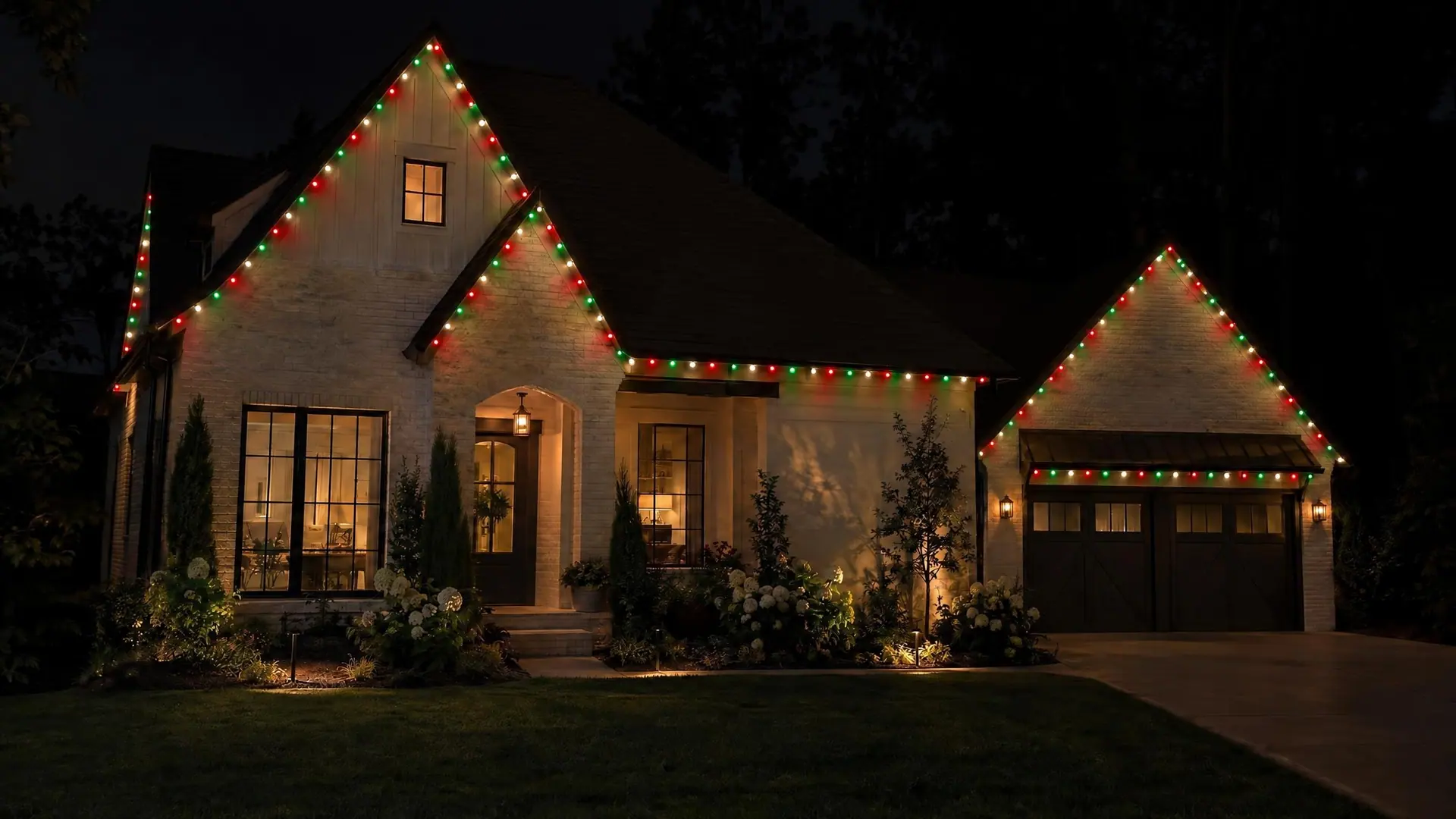
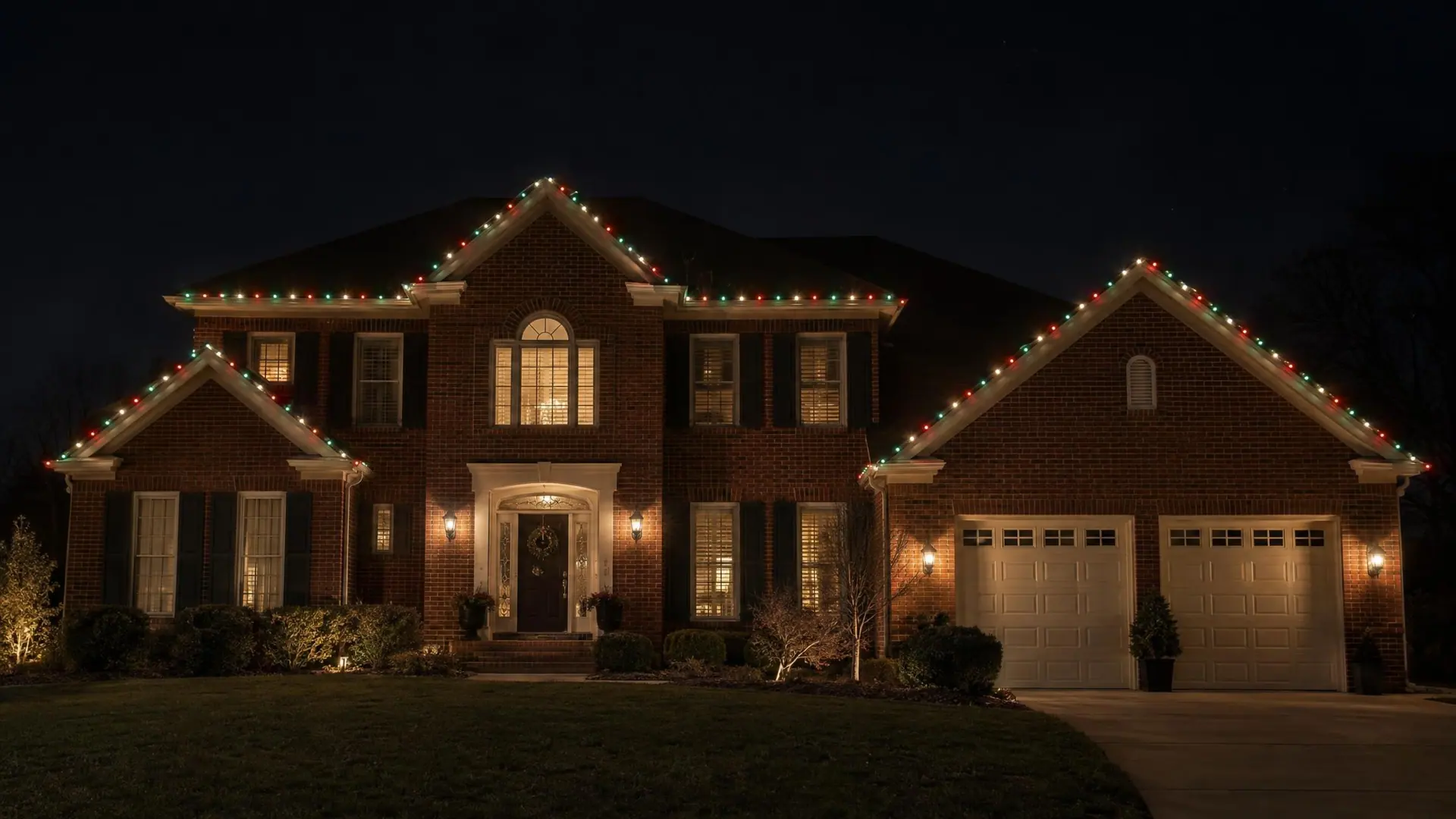
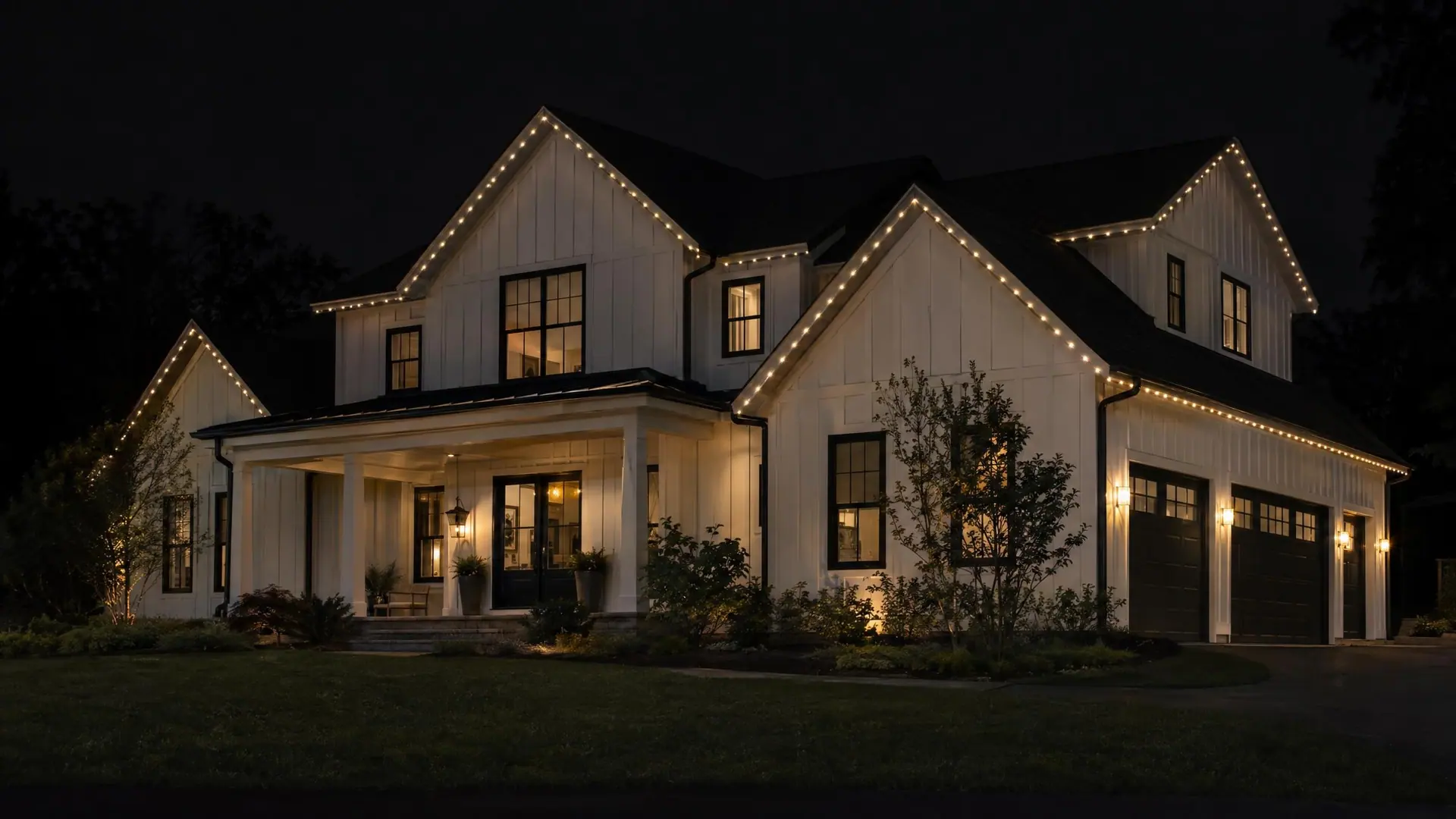
Or call or text (360) 369-0936. Every house pictured on this page is an illustration, not a photo of a real home or one of our installs.
The ideas at a glance
Eight ideas, from a front-only layout to a full wrap
- Warm-white roofline150–220 feet
- Front only60–130 feet
- Two-story gables140–220 feet
- Garage and the gable above70–90 feet
- Full wrap280–340 feet
- Color patternWorks with any layoutPriced by the feet of your layout
- Porch eave and railingAdd to any layoutPorch eave by the foot; railings quoted at the measure
- Front-yard treeAdd to any layoutQuoted at the measure
The feet are planning examples; the free measure sets yours. We charge by the foot: simple, honest, no hidden fees. Your written quote spells out everything before any work starts.
Idea 1
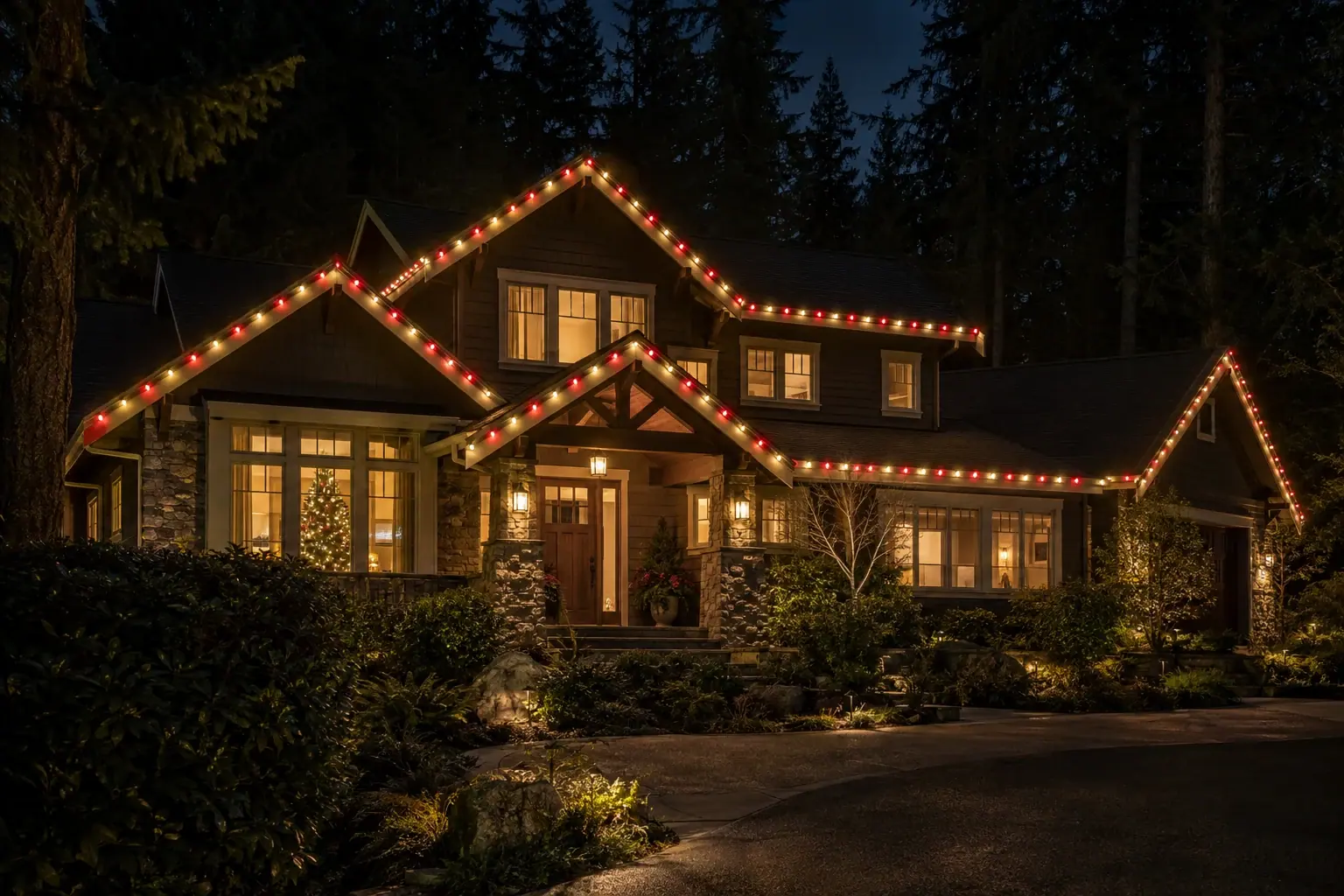
Start with the roofline: eaves and gables in warm white
Works on: Almost any house, from a ranch to a two-story. It's the layout we'd start with.
An outline traces the shape of the house, so it looks planned from the street even in a single color. Warm white is the easy first choice. It's the soft, slightly golden glow of the old incandescent strands, and it sits well on cedar, brick and painted siding. How the whites compare.
Gables add more feet than people expect. Each one is two sloped runs, so a 24-foot-wide gable adds about 30 feet of lights. Ridges and valleys are hard to see from the street, so most layouts leave them dark.
- What's lit
- Front eave
- Street-facing gables, both slopes
- Garage eave
- Feet
- 150–220 feetOur planning examples: about 150 feet for a single-story ranch (front elevation plus garage return) and 220 for a two-story (front, gables and garage).
- Price
- Priced by the foot · No hidden fees
Idea 2
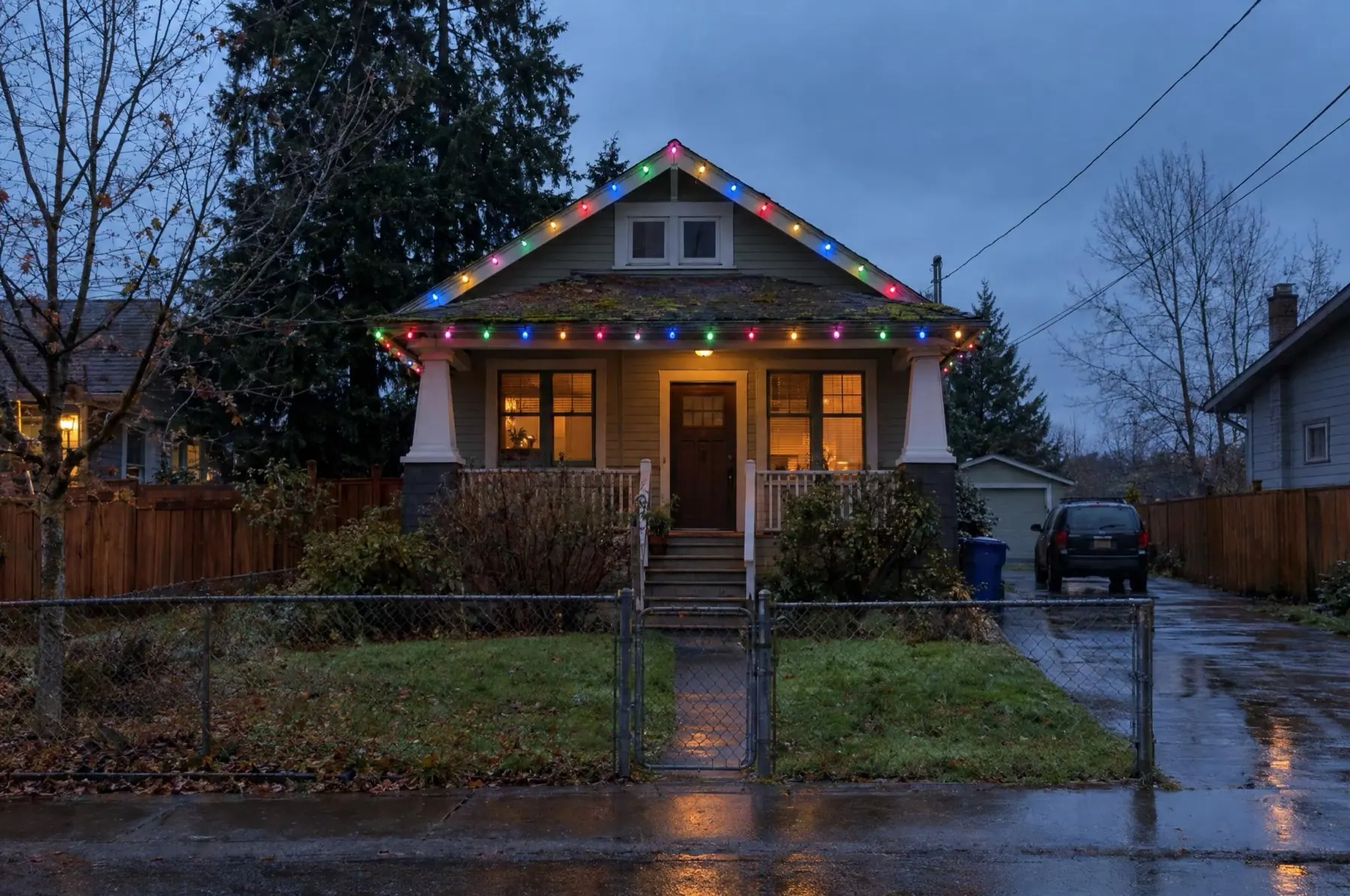
Front of the house only: the budget layout
Works on: Single-story houses, a first year of hired lights, or any house whose sides face a fence.
The street-facing eave and the garage are the two lines closest to the sidewalk, so they carry most of the look. On a single-story house, that may be all you need.
You pay for the feet you light, with the January takedown and storage included in year one. Adding the porch eave or one gable adds its own feet to the total.
- What's lit
- Front eave
- Garage eave, or the porch eave when the garage is out back
- Feet
- 60–130 feetFront eave plus garage eave usually runs 60 to 100 feet. Our single-story ranch example, front plus garage, is 130.
- Price
- Priced by the foot · No hidden fees
Idea 3
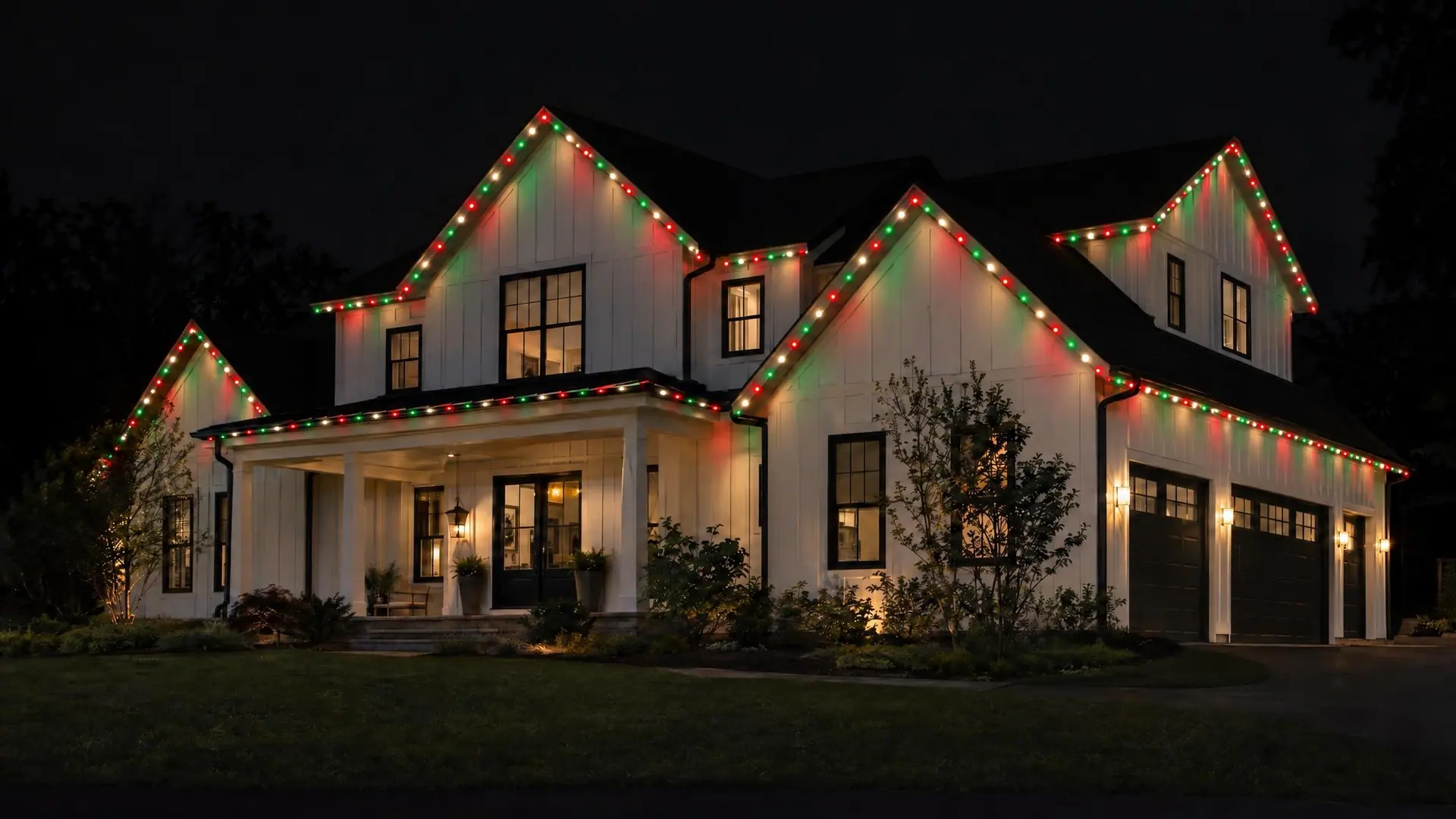
Gables and peaks on a two-story house
Works on: Two-story houses with gables facing the street: farmhouses, craftsman two-stories and newer subdivision plans.
Gables give a two-story its height, and they're what people see from down the block. Outline every peak and the house reads tall and deliberate, even in one color.
Upper gables mean the tallest ladder on the job. We clip every bulb. In Washougal, Camas, Gresham and Troutdale we also route the cord behind the drip edge on exposed corners and tension the strand, so the east wind can't slap it against the fascia.
- What's lit
- Every street-facing gable, both slopes
- The main eave between them
- The garage eave
- Feet
- 140–220 feetThe front of a two-story usually runs 140 to 180 feet. Our two-story example, with gables and garage, is 220.
- Price
- Priced by the foot · No hidden fees
Idea 4
Christmas lights on the garage: the garage-forward house
Works on: Garage-forward plans, where the garage is the part of the house nearest the street.
When the garage is the front of the house, light it first. The garage eave and the gable above it are the lines nearest the sidewalk, and the porch eave ties them to the front door.
The garage eave and gable come to about 70 to 90 feet, and the porch eave adds its own feet, priced by the foot like the rest.
- What's lit
- Garage eave
- The gable above the garage
- Porch eave
- Feet
- 70–90 feetA garage-forward plan often puts 40 to 60 feet of eave at the sidewalk, and a 24-foot gable above it adds about 30.
- Price
- Priced by the foot · No hidden fees
One moment…
Checking availability.
Idea 5
Corner lots: the full wrap
Works on: Corner lots, and houses seen from two streets or from a park or trail behind.
If people see your house from two sides, light both. A corner lot with only the front lit looks unfinished from the side street.
The back of the house is optional. Light it if it faces a street, a park or a trail; otherwise the front and sides do the work.
- What's lit
- Every eave and gable on all four sides
- Garage and porch
- Feet
- 280–340 feetFull wraps usually run 280 to 340 feet. Our large two-story example (all four sides, gables and porch) is 320.
- Price
- Priced by the foot · No hidden fees
Idea 6
Color patterns: red and white, red and green, multicolor
Works on: Any of the layouts above. Patterns read best on long, simple runs.
Warm white is the quiet choice; a pattern is the festive one. We stock three: red and white, the candy-cane look; red and green; and multicolor. A two-color repeat reads clearly on a long, straight eave. On a roofline broken into many short runs, one color keeps it calm.
A pattern is one option from our list of eight, priced by the foot the same as a single color. See all eight colors, and which houses suit them.
- What's lit
- The same lines as your layout, in a two-color or multicolor repeat
- Price
- Priced by the feet of your layout
Idea 7
Christmas lights on the porch: the eave and the railing
Works on: Covered porches on craftsman houses, bungalows and farmhouses.
The porch is the part of the house guests walk up to. Its eave is roofline like any other run, priced by the foot. Railings vary too much to price by the foot, so we quote them at the measure.
Want the porch columns lit, too? On a permanent system, each column takes a vertical run in the same channel as the roofline, usually 10 to 20 feet. Where permanent lights go.
- What's lit
- Porch eave, priced like any roofline run
- Porch railing, quoted at the measure
- Price
- Porch eave by the foot; railings quoted at the measure
Idea 8
The front-yard tree
Works on: A maple, an oak or a fir you can see from the street.
A lit tree puts light in the yard as well as on the house, which gives the whole lot depth from the street. Trees are quoted at the measure, because size and shape vary so much.
For a tree that stays lit every year, our permanent Diamond Tree Wrap spirals a light every 24 inches up the trunk and out the main branches. We measure the wrap path at the free measure and quote it with the house.
More on lighting trees and shrubs: Christmas Lights on Trees and Bushes: How Pros Light Them.
- What's lit
- The tree nearest the street
- Price
- Quoted at the measure
Closer to the door
More outdoor Christmas light ideas: windows, columns, walkways and bushes
The roofline carries the look from the street. These put light where guests walk up, and most are ground-level jobs you can do yourself. Our published seasonal package is C9s on the roofline, with railings and trees quoted at the measure; for anything else here, mention it when you book and we'll tell you at the measure whether we can include it.
Windows and doors
- How
- Outline the frame with mini lights or C7s, the smaller bulb that suits things seen up close. Use clips made for trim, not nails or staples.
- Best for
- The front door and the windows beside it, which guests see from the walk.
- With us
- Ask when you book; it isn't part of our published seasonal package.
Porch columns
- How
- Spiral a strand up each column from the base with even gaps, or run a straight line up each face.
- Best for
- Craftsman and farmhouse porches with two to four columns.
- With us
- Ask when you book; it isn't part of our published seasonal package.
Porch railings
- How
- Clip a strand along the top rail, or wind lights through garland on the rail.
- Best for
- Covered porches that face the street.
- With us
- Quoted at the measure, with the porch eave.
Walkways and driveways
- How
- Stake lights along both edges, evenly spaced, so the path leads to the door.
- Best for
- Long front walks and curved driveways.
- With us
- Ask when you book; it isn't part of our published seasonal package.
Bushes and hedges
- How
- Drape net lights over each shrub, sized to cover the sides as well as the top. How to size and plug in net lights.
- Best for
- Round or boxy shrubs along the front of the house.
- With us
- Ask when you book; it isn't part of our published seasonal package.
Icicle lights
- How
- Strands with short drops hang from the eave, so the roofline reads as a curtain rather than a line of bulbs.
- Best for
- Long, straight eaves on a single-story house.
- With us
- Not in our package: our seasonal service hangs C9 bulbs along the roofline.
By house style
Christmas light ideas by house style
Outdoor Christmas light design starts with the house itself, because different houses need different lines. What we'd light first on the common Northwest styles, what to add next, and the mistake to avoid:
Rambler
- Light first
- The long front eave and the garage.
- Then add
- The entry or porch eave.
- Watch for
- A long, straight eave is where a two-color pattern looks best. Our ranch example is about 150 feet.
Split-level
- Light first
- Both rooflines, upper and lower, so the two levels read as two layers of light.
- Then add
- The garage.
- Watch for
- Lighting only the upper roof leaves the front door in the dark.
Craftsman bungalow
- Light first
- The front gable and the porch eave.
- Then add
- The dormer, and the porch railing (quoted at the measure).
- Watch for
- A small bungalow's front is a short run, priced by the foot, so the dormer or a side eave adds its own feet to the total.
Garage-forward two-story
- Light first
- The garage eave and the gable above it.
- Then add
- The porch eave, then the upper gables.
- Watch for
- The garage alone can look lopsided. The porch eave connects it to the front door.
Brick two-story
- Light first
- The main eave and every front gable.
- Then add
- The garage gable.
- Watch for
- Solid red bulbs lose contrast against red brick. Warm white, or red and white, shows the outline.
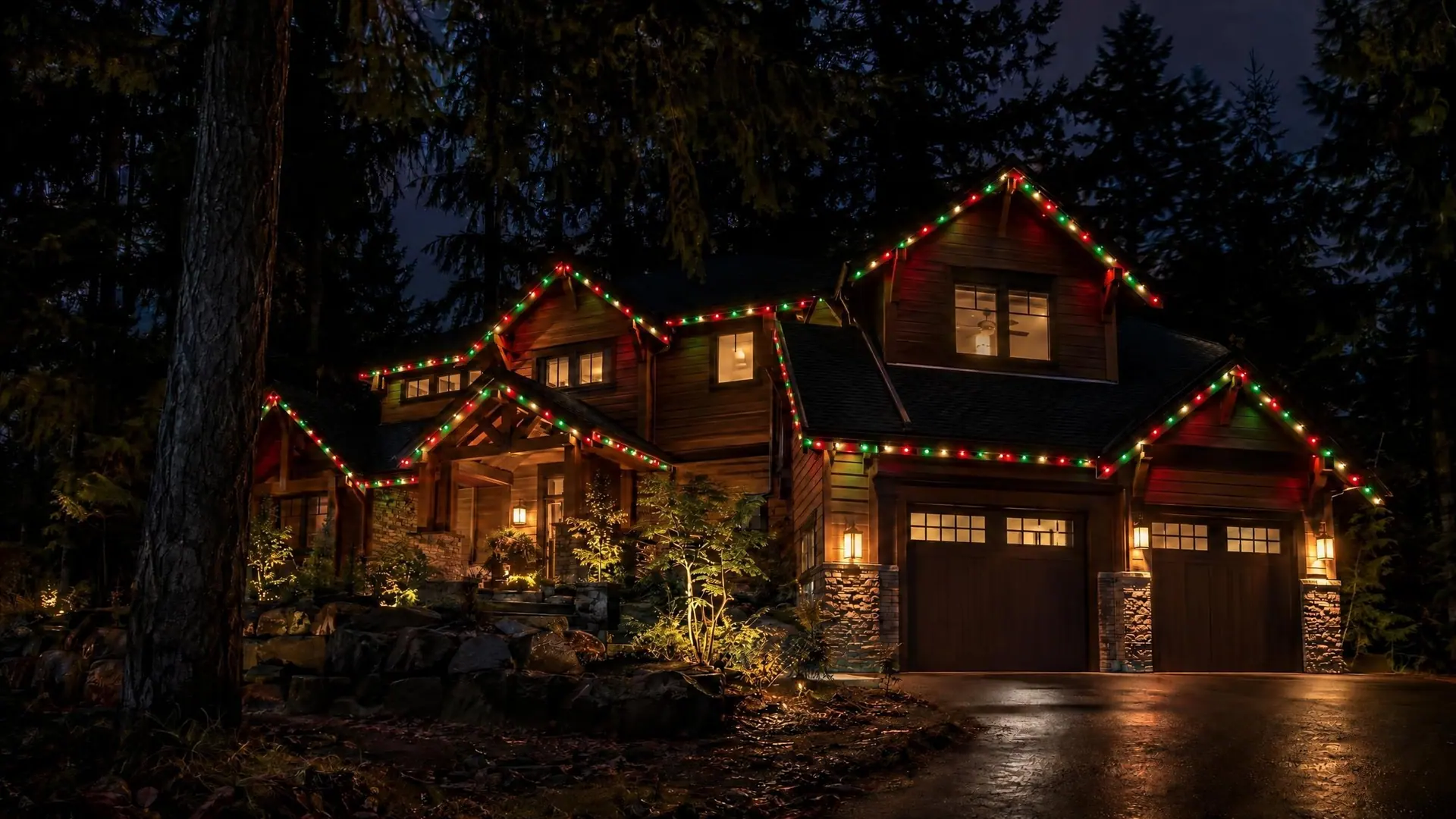
Cedar house among firs
- Light first
- The gables and the garage.
- Then add
- The eave between them.
- Watch for
- Firs close to the house can hide an eave. Light the lines you can see from the road.
Modern
- Light first
- One clean line along the fascia, in warm white or pure white.
- Then add
- Often nothing. A minimal house suits a single line.
- Watch for
- Patterns can look busy on a minimal house. Flat and metal roof edges are checked at the measure for where the clips go.
Hillside or view home
- Light first
- The side people actually see, often the downhill side or the one facing the road below.
- Then add
- The garage, if it faces the street.
- Watch for
- The street-side elevation may be the side people see least.
See ideas in person
The quickest way to pick a look is to drive past a few. Our Clark County Christmas lights map lists home displays and holiday events, including Holidays on Franklin, a one-block neighborhood display in Vancouver. In 2025, Battle Ground's city-run Battle of Lights contest also posted a Tour of Lights map of the entered houses.[3]
Every year, no ladder
The permanent version: lit every year without the re-hang
If you like the look but not the yearly install, permanent lighting stays up. It runs warm white on ordinary nights and red and green in December, from a phone app, with the wire hidden in a channel matched to your fascia.
Pebble Track and C9 Track include the controller, and there's nothing to re-hang each fall. On average, permanent lights run about $3,000; smaller homes often cost less, and the free measure gives your exact written quote. Permanent vs seasonal lights, compared.
Summary
What each idea takes, and how it's priced
| Idea | What's lit | Feet | Price |
|---|---|---|---|
| Warm-white roofline | Front eave · Street-facing gables, both slopes · Garage eave | 150–220 | By the foot |
| Front only | Front eave · Garage eave, or the porch eave when the garage is out back | 60–130 | By the foot |
| Two-story gables | Every street-facing gable, both slopes · The main eave between them · The garage eave | 140–220 | By the foot |
| Garage and the gable above | Garage eave · The gable above the garage · Porch eave | 70–90 | By the foot |
| Full wrap | Every eave and gable on all four sides · Garage and porch | 280–340 | By the foot |
| Color pattern | The same lines as your layout, in a two-color or multicolor repeat | Priced by the feet of your layout | |
| Porch eave and railing | Porch eave, priced like any roofline run · Porch railing, quoted at the measure | Porch eave by the foot; railings quoted at the measure | |
| Front-yard tree | The tree nearest the street | Quoted at the measure | |
We charge by the foot: simple, honest, no hidden fees. Your written quote spells out everything before any work starts. Year one includes the install, a clip on every bulb, a timer or smart plug, the January takedown, testing, labeling and storage, and later seasons are a re-hang of the same layout. The feet are planning examples, not measurements of your house.
Christmas light idea questions
What's the classiest way to put Christmas lights on a house?
How many feet of Christmas lights does my house need?
Do the lights go on the roof or on the gutters?
Can I have one color on the house and another on the garage?
How much do Christmas lights cost on average?
When do the lights come down?
One moment…
Checking availability.
Read next
- Christmas light colorsWarm white, pure white, multicolor and the two-color patterns, and which houses suit each.
- Christmas Light Installation Cost 2026: Vancouver & PortlandOn average, Christmas lights run about $600; smaller homes often cost less, and the free measure gives your exact written quote. Plus what others charge.
- How to Hang Christmas Lights on Your House Like a ProMeasure, pick the right clip for gutters, shingles and gutter guards, plan outlets and timers, and know when to get off the ladder, or have it hung.
- Christmas Lights on Trees and Bushes: How Pros Light ThemTrunk wraps, branch wraps, canopy drapes and net lights on shrubs: how each looks, how many lights a maple or fir takes, and seasonal vs permanent wraps.
- Where to Put Permanent Christmas Lights on a HouseA 24-ft gable adds about 30 ft of roofline: where to put permanent Christmas lights on eaves, gables, garage and trees, and what to skip.
- Permanent vs seasonal lightsHow seasonal and permanent lights compare over five years.
- Christmas light installationWhat the service includes, from the install to the January takedown and storage.
Christmas lights by city
Vancouver, WA · Camas, WA · Washougal, WA · Ridgefield, WA · Battle Ground, WA · Salmon Creek, WA · Hazel Dell, WA · Felida, WA · Brush Prairie, WA · Hockinson, WA · Orchards, WA · La Center, WA · All service areas
Sources
Feet are planning examples, not measurements of anyone's house. Outside facts come from these pages, read on September 26, 2026; product specs change, so check the maker's page before you buy.